Imagine finally finding the practitioner who helped when no one else could. Perhaps it was an herbalist.
A homeopath.
An integrative physician. A nutrition counselor.
Or another practitioner whose knowledge changed your life – or the life of someone you love.
Now imagine waking up one day and discovering they could no longer offer that care—not because it wasn’t helping people…
…but because there was a law that said they couldn’t.
…or because the information they once freely shared was now considered outside the accepted standard.
…or because lawmakers, licensing boards, or regulatory agencies had narrowed the options that are legally available to you.
For millions of Americans, that possibility is becoming increasingly real.
Health freedom isn’t only about protecting your right to refuse unwanted medical interventions. It is also about protecting your ability to say YES to the practitioners and treatments that you believe are right for you and your family.
That’s exactly why National Health Freedom Action (NHFA) exists: to keep your access open.
While most people never see it happening, legislative work is constantly unfolding in state capitals across America. Every legislative session brings new opportunities to expand health freedom—and new threats that could limit it.
As we prepare for the upcoming legislative session, our NHFA attorneys and policy team are already hard at work.
They are reviewing legislation, drafting model bills, advising grassroots leaders, preparing legal strategies, and helping advocates build coalitions long before the first committee hearing is ever scheduled.
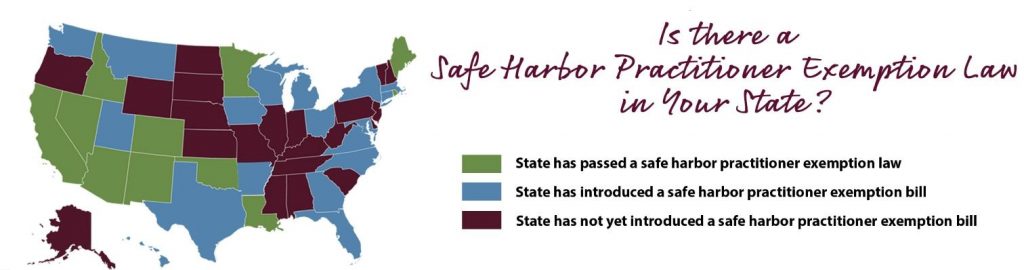
NHFA has a special commitment to supporting the passage of Safe Harbor Exemption bills that protect access to complementary and alternative health care practitioners who do not hold state occupational licenses and are currently practicing in the public domain. The bills protect the broad range of health care and healing practitioners, including but not limited to herbalists, traditional naturopaths, homeopaths, Ayurvedic and Reiki practitioners, and culturally specific healing practices that are not currently licensed or registered by the states and that do not rise to the level of concern requiring state oversight, certification, registration, or licensure.
Historically, medical practice acts that prohibit practicing medicine without a license have been used to shut down the unlicensed complementary and alternative practitioner. Potential criminal charges include fines and jail time, even though these practices should not be regulated as they do not pose an imminent risk to the health, safety, and welfare of the public.