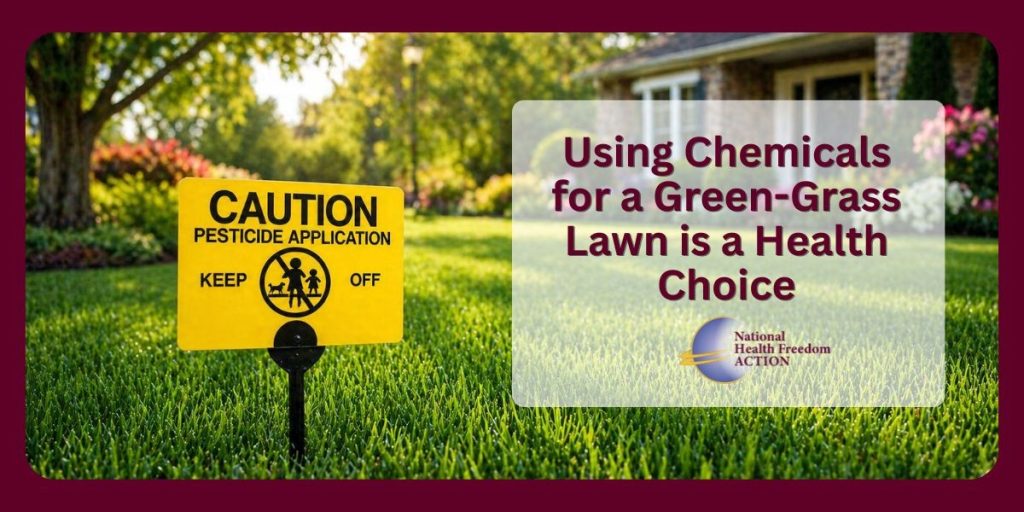
A choice to have a green lawn can be an aesthetic choice, but it can also be a health choice for ourselves, our families, our neighbors, and our community. Lawn chemicals are invisible poisons, designed to disrupt life processes of plants, insects, fungus, and rodents. And the impact on human health is well documented. For example, the broadleaf herbicide killing mechanism of plant growth regulators (PGRs) is not a single activity, but the disruption of several fundamental plant processes, such as maintenance of cell membrane integrity and protein synthesis.
According to the National Wildlife Federation, pets, humans, and other mammals including our beloved cats and dogs encounter risks from lawn chemical exposure: “Rodenticides and herbicides are toxic if ingested. For instance, pets and wildlife roaming free on treated lawns can absorb chemicals through their paws or ingest them while grooming. Pyrethroids in particular can cause infertility, damage to immune systems, and cardiac disease in humans. Even some ‘mammal-safe’ pesticides, such as triazoles, can ultimately break down into compounds that become toxic to mammals. Pesticide exposure is linked to severe health issues including cancer—for wild mammals, pets, and humans alike.”
The fact that these chemicals are invisible puts people in a very precarious situation when wanting to protect their own health. Whether it is living in a neighborhood where half the lawns are green and the other half are allowing natural growth to occur, or whether one is walking on a public walkway or bike trail that might have been sprayed with toxins, one never knows. Staying indoors and isolating is not an option for most people, so we are exposed without our consent to a chemical soup in our daily lives.
Legislators are beginning to respond to this tragic dilemma. According to a press release by New Jersey Senator Cory Booker’s (D-NJ) office:
“Each year, the United States uses over a billion pounds of pesticides — nearly a fifth of worldwide use. Once they’re approved, pesticides often remain on the market for decades, even when scientific evidence overwhelmingly shows a pesticide is causing harm to people or the environment. In 2017 and 2018, the Environmental Protection Agency registered more than 100 pesticides containing ingredients widely considered to be dangerous. Approximately one-third of annual U.S. pesticide use — over 300 million pounds from 85 different pesticides — comes from pesticides that are banned in the European Union…”
To address this reality in the USA, Congressmen have introduced The Protect America’s Children from Toxic Pesticides Act (PACTPA). Originally introduced by Senator Tom Udall and Representative Joe Neguse in 2020, it was re-introduced by Senator Corey Booker in the Senate and sponsored by Jim McGovern in the House in 2023. It has become the beacon of hope for envisioning the USA’s banning of toxic pesticides. And most recently July 2025, Senator Booker introduced the Pesticide Injury Accountability Act (PACTPA), legislation that would ensure that pesticide manufacturers can be held responsible for the harm caused by their toxic products. Specifically, the bill would amend the Federal Insecticide, Fungicide and Rodenticide Act of 1972 (FIFRA) to create a federal right of action for anyone who is harmed by a toxic pesticide PACTPA’s main clause is quite brief and clear:
“Any person the property or person of which is injured by a pesticide may bring a civil action in Federal district court against a registrant of the pesticide for monetary damages for injury to the property or person caused by the pesticide.”
According to GMO/Toxin Free USA, some highlights of PACTPA are that it would BAN some of the most damaging pesticides including:
Organophosphate insecticides (including chlorpyrifos), designed to target the neurological system, they have been linked to neurodevelopmental damage in children[1];
Neonicotinoid insecticides, which have contributed to pollinator collapse around the world (the European Union and Canada have significantly restricted or banned their use to protect pollinators and other wildlife) and have recently been shown to cause developmental defects, heart deformations, and muscle tremors in unborn children [2];
Paraquat herbicide, which is one of the most acutely toxic herbicides in the world. According to the EPA, just “one sip can kill.” [3] Science has shown that chronic exposure to paraquat increases risk of developing Parkinson’s disease by 200% to 600% [4]. It is already banned in 32 countries, including the members of the EU.
72 pesticides would be restricted immediately.