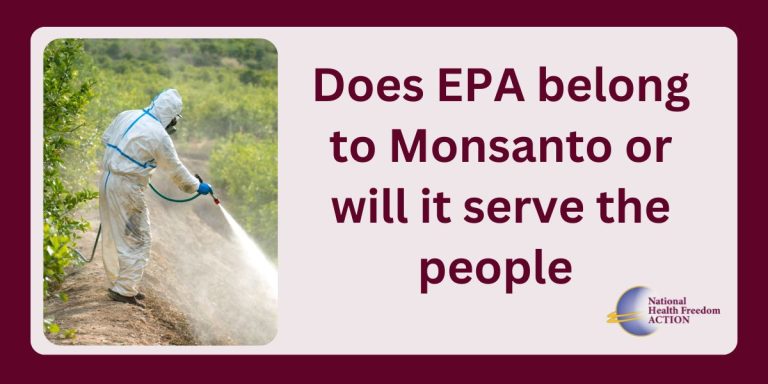
On April 28, 2026, the United States Supreme Court heard oral arguments in Monsanto Company v. Durnell, a landmark case revolving around the toxicity of the herbicide Roundup and its main ingredient, glyphosate. The Supreme Court has yet to rule. The case began with a trial held in state court in Missouri, invoking state law. John Durnell, a gardener in Missouri, sued Monsanto saying that Roundup caused his non-Hodgkin lymphoma and that Monsanto should have had a warning on the Roundup label disclosing the risk of cancer to the user. At the end of the evidence, Monsanto asked the trial court judge to rule in its favor, arguing that federal law specifically under the Federal Insecticide and Rocenticide Act (FIFRA), preempted the state law claim so the case should not go to the jury. The court declined. The jury then awarded Durnell $1.25 million in damages on the failure-to-warn claim. Monsanto asked the trial court judge to overturn the jury verdict, arguing again that federal law preempted state law. The trial court said no, and Monsanto appealed. The appellate court also sided with Durnell, and Monsanto appealed yet again, this time to the US Supreme Court.
Will the state failure-to-warn claims be preempted?
The US Supreme Court must make a decision regarding the reach of a federal statute, FIFRA, and whether state law still protects those within that state, when, as here, the Environmental Protection Agency (EPA), the federal agency that should have protected the people, did not. Bayer Corporation, which bought Monsanto in 2018, argued that under FIFRA, a state cannot legally require a better warning label than one approved by the EPA. Plaintiffs argued that a product can be inadequately labeled even if the product label had been approved by EPA, that nothing under FIFRA made EPA’s approval of a label binding, and that under FIFRA, state claims for failure-to-warn are not preempted. The Supreme Court will likely rule before the end of July.
Massive injuries and an avalanche of cases
More than 100,000 people have filed or joined lawsuits against Monsanto for damage caused by the herbicide Roundup. The first lawsuit alleging that Monsanto’s herbicide Roundup caused cancer that went to trial resulted in a San Francisco jury verdict for plaintiff Dewayne Johnson in the amount of $289 million; that amount was later reduced to $21 million after appeal. Mr. Johnson had used the weedkiller regularly for his job as groundskeeper and developed non-Hodgkin lymphoma. In the lawsuit, Johnson argued that, for years, Monsanto knew that Roundup was carcinogenic but hid the information and failed to warn the public. Robert F. Kennedy, Jr., led Johnson’s team of attorneys. Other large jury verdicts include a jury verdict of $2 billion just in punitive damages in Pilliod v. Monsanto Company. If Bayer Corporation wins the Durnell case, the “failure-to-warn” claims would not be able to proceed. If Durnell wins, then these state juries can hold Monsanto liable for not warning the public of the risk of cancer. Since Monsanto Company v. Durnell is also a dispute about the respective powers of the state and the federal government, especially regarding actions by a federal agency, the decision will also have a greater impact than the Roundup line of cases.
The history of glyphosate
Glyphosate, the active ingredient in Roundup, is a commonly used weed killer ingredient, not only around the home, but also massively in agriculture. It is used on crops to kill weeds and as a drying agent, especially for such common crops as wheat and oats, allowing the farmer more control over when crops are harvested. Its presence is pervasive in the food chain. Roundup went on the market in 1974, and in 1984, the EPA classified Roundup as a Group C carcinogen, in that there was “suggestive evidence of carcinogenic potential.” Then, in 1991, EPA designated the herbicide as Group E, that there was “evidence of non-carcinogenicity for humans.” Probably it was no coincidence that not long after, in 1996, the first “Roundup ready” soybeans were first marketed, soybeans that had been genetically modified to still grow even when sprayed with Roundup. Soon other crops followed that were genetically modified to tolerate exposure to Roundup. When the patent for Roundup expired in 2000, many companies quickly brought out their own products that contained glyphosate, and according to the National Pesticide Center in 2019, there were over 750 different glyphosate-based products in the United States.
The most influential paper in 2000 was later found to be fraudulent
In 2000, a paper, Safety Evaluation and Risk Assessment of the Herbicide Roundup and Its Active Ingredient, Glyphosate, for Humans,Regulatory Toxicology and Pharmacology, was published and concluded that Roundup did not “pose a health risk to humans.” This paper was of great influence internationally, and in the two decades that followed, it was cited in over 800 academic papers, many government documents, and on such online platforms as Wikipedia. It was revealed over time, however, that the paper’s conclusions were based on unpublished studies provided by Monsanto and that the authors ignored other studies that had raised concerns. Monsanto employees had contributed to the writing of the article, but this was not mentioned in the article. The authors had conflicts of interest and had, in fact, received payments from Monsanto which again were not disclosed. The paper was retracted in 2025.
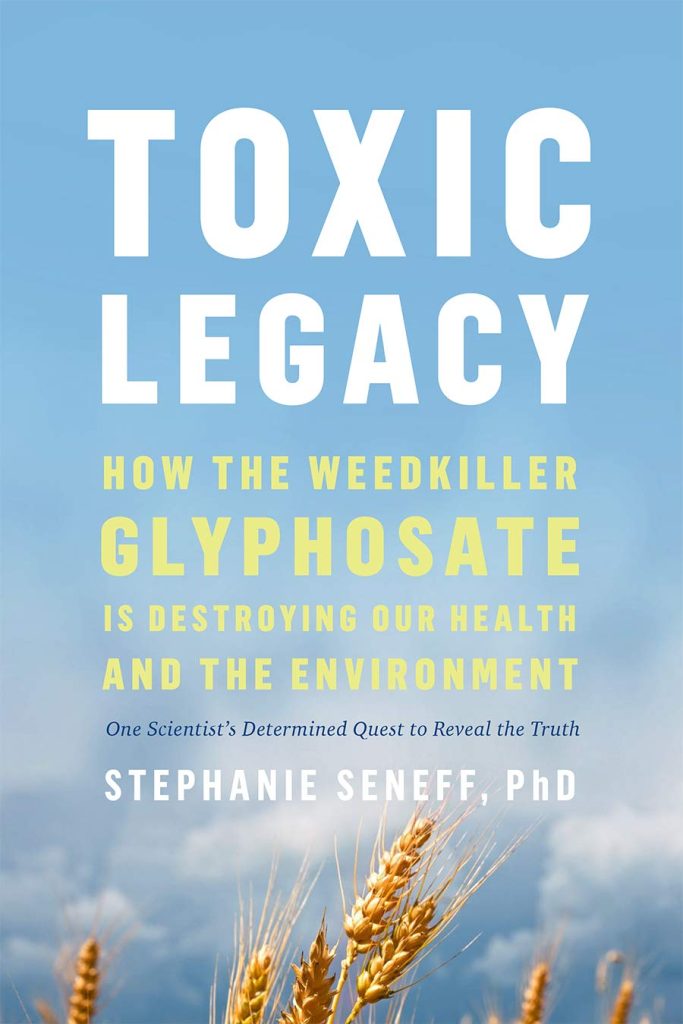
Stefanie Seneff’s 2021 book on glyphosate brilliantly reveals how seriously harmful glyphosate is to human health and the environment. It drives home just how tragic EPA’s failure to protect has been and helps explain why health problems are so widespread.
Although the EPA has considered glyphosate safe and still has not retreated from this position, the health effects of glyphosate were taken more seriously in other parts of the world. In 2015, the International Agency for Research on Cancer (IARC) reviewed 1000 studies on glyphosate and classified it as Group 2A, “probably carcinogenic to humans.” Numerous jurisdictions around the world have banned or otherwise restricted the use of glyphosate. EPA has not reflected the impact of the retraction of the fraudulent paper on its viewpoint.
EPA is still cozy with glyphosate
EPA reviews registered pesticides every 15 years, and in February 2020 published an interim decision registration review decision (ID) for glyphosate and concluded that there was:
No risks of concern to human health from current uses of glyphosate;
No indication that children are more sensitive to glyphosate;
No evidence that glyphosate causes cancer in humans; and
No indication that glyphosate is an endocrine disruptor.